Featured 1

Curabitur et lectus vitae purus tincidunt laoreet sit amet ac ipsum. Proin tincidunt mattis nisi a scelerisque. Aliquam placerat dapibus eros non ullamcorper. Integer interdum ullamcorper venenatis. Pellentesque habitant morbi tristique senectus et netus et malesuada fames ac turpis egestas.

Featured 2

Curabitur et lectus vitae purus tincidunt laoreet sit amet ac ipsum. Proin tincidunt mattis nisi a scelerisque. Aliquam placerat dapibus eros non ullamcorper. Integer interdum ullamcorper venenatis. Pellentesque habitant morbi tristique senectus et netus et malesuada fames ac turpis egestas.

Featured 3

Curabitur et lectus vitae purus tincidunt laoreet sit amet ac ipsum. Proin tincidunt mattis nisi a scelerisque. Aliquam placerat dapibus eros non ullamcorper. Integer interdum ullamcorper venenatis. Pellentesque habitant morbi tristique senectus et netus et malesuada fames ac turpis egestas.

Featured 4

Curabitur et lectus vitae purus tincidunt laoreet sit amet ac ipsum. Proin tincidunt mattis nisi a scelerisque. Aliquam placerat dapibus eros non ullamcorper. Integer interdum ullamcorper venenatis. Pellentesque habitant morbi tristique senectus et netus et malesuada fames ac turpis egestas.

Featured 5

Curabitur et lectus vitae purus tincidunt laoreet sit amet ac ipsum. Proin tincidunt mattis nisi a scelerisque. Aliquam placerat dapibus eros non ullamcorper. Integer interdum ullamcorper venenatis. Pellentesque habitant morbi tristique senectus et netus et malesuada fames ac turpis egestas.

Translate

Showing posts with label organic controls. Show all posts

Saturday, May 14, 2011

Growing Garlic

We harvested the first bulb of garlic last weekend: what a wonderful Mother's Day gift from the garden!


Pictured Left: "Fresh from the earth", a massive bulb has gently been eased out of the bed it has rested in for the last 5 months.

It was a much easier project than I expected (but of course, I had no idea what to expect!)


We purchased 5 bulbs of ORGANIC garlic from the grocery store, looking specifically for the 'locally grown' label. This is important for two reasons: organic garlic will not have any growth inhibitors sprayed on it (so it doesn't sprout in the grocery store) and the 'local' label means it is a variety suited for our area...


The bulbs were separated into individual cloves. No need to undo all the papery wrappings...and soaked for three hours in a bowl of water containing a splash of fish emulsion (from the garden supply center) and a teaspoon of baking soda (to help ward off any fungal diseases).


November 10: Cloves were poked into the bed of loose, well draining soil about an inch under the ground with their 'pointy sides' facing up.


That was it! a little water during dry spells and nothing else had to be done... The young garlic sprouts are edible the way fresh spring onion greens can be...and it was a trooper through our very cold Texas winter this year. We will definitely be planting more again next fall !!

In the mean time, fresh garlic will be for sale at ze Farmer's Market this spring!! We start next Saturday, May 21, at 7am near the corner of Broad and Main in Historic Mansfield... See you there!

Friday, April 22, 2011

ATTRA: A wonderful resource for Homesteading!

If you don't know about this amazing resource, now is the time to get on their website and take a look around. Click here for a link to the National Sustainable Agriculture Information Service.


I remember when they were getting started back in the 1990's as a part of the National Center for Appropriate Technology; the wealth of information available through this organization is astounding!


Whether you seek information on organic apple production, are interested in water and soil conservation, want to know more about keeping chickens, are looking for an internship in sustainable food production, or need funding for rural energy development, THIS IS A ONE STOP SHOP for Sustainable Living!


In Celebration of Earth Day, why not take a moment to see what ATTRA has to offer, and help spread the word? Peace, Love, and Learning!

Thursday, April 7, 2011

Building the Homestead- a photo history 2006-2010

U.G.L.Y. Yup, it sure starts out plain, so keep scrolling down!
I am blown away by the changes! This is the first time to upload all of the photos and view them side by side. It just goes to show: you don't have to start with something fancy! All we started with was a dream for Forgotten Works; an interactive garden/gallery full of inspiration for gardeners and new homestead enthusiasts...

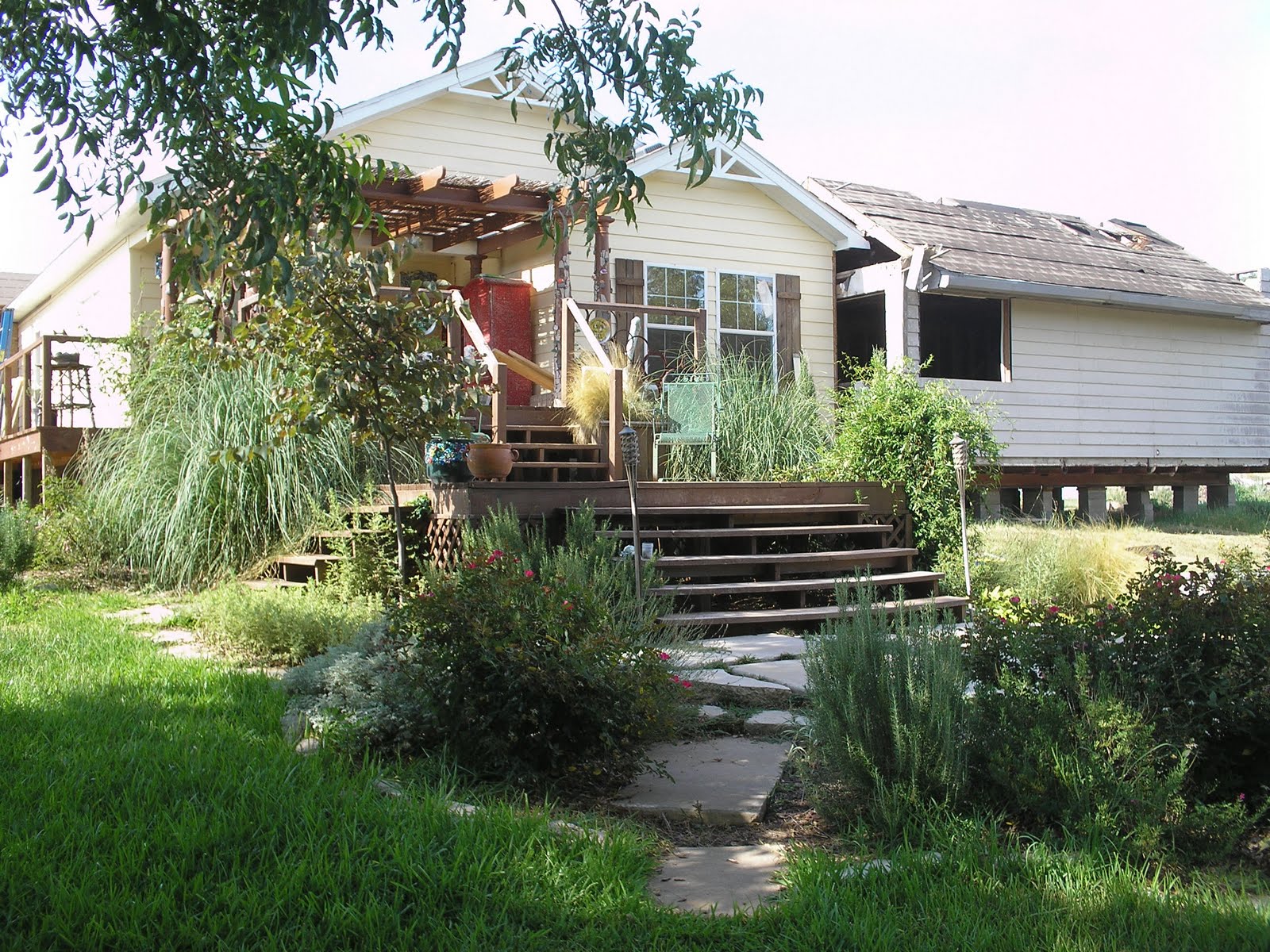
October 2006 we moved our wee green bungelow to 7 acres of pasture; up from the lush creekbed where it had flooded twice.

By Summer of 2007 it was yellow for some reason, and the sheet composting project to help add nutrients to the worn out soil had begun in earnest.

2008 saw the addition of a small lakehouse (400 sf) to the left (west side) - to serve as a studio and office -and a kiosk to the right (east) side - to become a sunroom (currently the sun room houses two smelly teenage boys!)

2009 (above)was the turning point: the sunroom had windows and was actually attached with a door, and the plantings were beginning to look more natural, more permanent... not quite as "little oasis in the pasture".


2010(left): Eddie shattered his ankle, so it was all I could do to keep everything alive. We didn't see too much expansion (the orchard gained 40 trees), but the plants really started to fill in and make the place look established! Looks like we are sticking with the red, too;)

The gardens, too, have seen progress. We started with a herb bed, and honestly didn't know where we were going next!

The first few years were all about building soil ... in fact, this process is still very important and far from finished. In a perfect world, we would have improved ALL of the soil before planting anything, but that isn't very fun, is it? :) Looking east is the herb bed and veggie beds beyond. Year one sure was bleak!


We added a shed, and while working on soil improvement we let lots of legumes take over and work their magic as cover crops amid a few perennial herbs. I had surgery in 2008, so it was a pretty scraggly year!


2009 and 2010 were turning points for the garden as well: it crossed the threshold from 'pasted onto the landscape' over to 'a PART of the landscape'... I am sure the ever improving soil helps as well, and it sure makes all of the loads of manure hauled from the local stables seem worth it!

Other improvements include adding molasses and cornmeal to the soil, as well as beneficial nematodes and fungi cultures: it's all about building a healthy soil ecosystem capable of sustaining life!!!

A few beneficial insects like ladybugs have helped out as well, and I can't underestimate the value of the chickens when it comes to consumming harmful insect pests!


Conclusion: don't move just because your 'house' doesn't feel like 'home' yet! You can start with something plain (or hell, like us, even downright ugly!) and transform it into a lush, nurturing haven with just a dash of homestead savvy.


...Can't wait to see what the NEXT four years bring;) Time to go get dirty again my friends!

Monday, March 28, 2011

Weeds: Eat The "Enemy" ?

Each spring a war is waged across America: swords are drawn (hoes, tillers), weapons are gathered (chemical weapons of the most toxic sorts: Roundup, Atrazine, whatever is in 'weed and feed' formulas), and lines are drawn: homeowners and gardeners prepare to seek and destroy every 'weed' in their path.


A weed is really just a plant growing someplace it isn't wanted- after all an oak tree is a weed if it pops up in the vegetable garden! Some weeds are actually beneficial to the garden. For example (see in photo above) - vetch, a legume, which reduces erosion when few other things are growing in the cool, early spring AND fixes nitrogen for surrounding plants to use!


It is a good idea to learn to identify weeds common to your area, and perhaps adopt a practice of tolerance for a few. Some of my "favorites" include violets, primrose, and dollar weed, all of which I think are quite pretty. Primrose, the most invasive of the above, usually dies back completely by summer, and provides some much needed greenery in the winter and early spring. Same with violets...honestly, the live and let live philosophy for these attractive little ground covers allows for much more time drinking wine in the hammock; I think we are all happier since I decided to let them have their run... Primrose, pictured here, also has medicinal qualities and is a popular herb for women.


And while weeds may seem like mistakes in our perfectly primped garden beds, Mother Nature usually has a plan...Spring greens make essential tonics and teas for detoxifying our bodies after the heavy foods of winter. The three most recommended greens for 'spring cleaning' of the body just happen to be the most abundant in my beds in March and April: dandelion, henbit and chickweed.


Young dandelion greens are very mild and taste delicious in salads. Their leaves can also be used in tea for a mild detoxifying and laxative effect. For generations, this traditional spring food has been an essential part of a healthy spring diet. The same is true of henbit and chickweed pictured right and left: teas from these common weeds are very cleansing. Steep fresh leaves in boiled water, strain, and sweeten with some local honey. Be sure you have identified the plants correctly, and that they have not been sprayed prior to using for a tea! If you are uncertain, ask a local garden club member or botany professor at a nearby college...

Yes, some weeds really are 'ugly' and 'undesirable', although that may just be a matter of taste...The best remedy is to chop them out like a warrior, and be sure to get them before they go to seed. If a large area needs to be cleared, use 20% vinegar (from garden centers that carry organic supplies) mixed with 3 tablespoons of orange oil - apply this mixture as a spray.

But FIRST, consider using the vinegar (5% salad vinegar of course) to dress a little bowl of dandelion greens mixed with spinach, spring onions and a dash of olive oil... There is nothing quite as satisfying as eating your enemies!

Monday, February 28, 2011

Rally the Troops: It's Beneficial Insect Time!

As we move into March, early pests begin to emerge - mites, aphids, white flies, and other soft little 'suckers' perfectly time their hatching schedule to match that of the newly unfolding and tender young leaves of springtime. A healthy flush of rose leaves or new juniper growth can turn yellow and curled seemingly overnight, and the gardener's natural reaction is to run for the bottle - of pesticide, that is. Even botanical and natural pesticides (although an improvement upon their synthetic chemical counterparts) are often 'non-selective', and can harm the 'good bugs' that are our natural garden allies. Now is the time for the release of BENEFICIAL INSECTS. These bug friends include green lacewings, beneficial nematodes, trichogramma wasps, ladybugs, and praying mantis.

Green lacewings, pictured above, are often called "aphid lions" because of their voracious appetite for aphids. In fact, it is the lacewing larva that destroy garden pests. Lacewing larvae consume a variety of insects in vast quantities, including aphids, mealy-bugs, spider mites, leafhopper nymphs, caterpillar eggs, scales, thrips, and white-flies. The larvae attack the eggs of its prey with a paralyzing venom, and draw out the body fluids of the helpless victim. Ahhhh, garden biology: such graphic violence!! Adult green lacewings are harmless, feeding primarily on pollen and honeydew.

Green lacewings can be ordered from Marshall Grain in Fort Worth, as well as from my old friends at the Beneficial Insect Company in Fort Mill, SC.
Beneficial nematodes are microscopic roundworms that work in the soil to destroy grubs, fleas, gnats, flies, cutworms, billbugs, ants, and Japanese beetles. Beneficial nematodes are a highly effective alternative to chemical insecticides. They control harmful soil-dwelling insects by feeding on their larva - all without harming other beneficial bugs! Late March to early April is a good time to work nematodes into the garden, and they are available at Marshall Grain.
March is also the best time to release trichogramma wasps. These wasps, harmless to humans, destroy caterpillars. While many moth and butterfly larvae can be devastating to the garden, I love my swallowtails so much that I tend to spot treat problem caterpillars with a Bt spray instead. If you are overrun with caterpillars though, these wasps can be invaluable. They can be found at Planet Natural.

Ladybugs are a beneficial favorite. Voracious hunters of aphids, they have been shown to be more effective at their control than any chemical application! Plus, they are just so durn cute. Almost all beneficial insect suppliers carry ladybugs, as do many local garden centers nowadays.
As the season progresses, praying mantis egg cases can be placed in the garden. One egg case can contain dozens of mantis, the most ferocious pest predator in the garden- feasting on bugs of all sizes. Try the Beneficial Insect Company for egg cases and recommended release dates in your area.
My schedule begins with green lacewings and nematode orders readied for next week, followed by ladybugs and praying mantis. I'll skip the wasps, because I want to protect my butterflies, and opt for Bt sprays if problem caterpillars crop up.
Rally your troops, and let the bugs do your dirty work this year - which means more time for a glass of wine in the garden!
Related Posts Plugin for WordPress, Blogger...